

Crystal Geodes 101
Geodes: Types, Formation, Identification & Uses
Geodes are one of nature’s better surprises. From the outside, a geode can look like an ordinary rough rock. Crack one open, however, and you may find a hollow interior lined with quartz, amethyst, calcite, agate, or other minerals.
No two geodes are exactly alike. Their color, crystal size, mineral composition, and internal structure all depend on where and how they formed.
In this guide, we’ll look at what geodes are, how they form, the most common types of geodes, what gives them their color, and how to identify one.
What are geodes?
Geode vs. Nodule vs. Vug
These terms are sometimes used interchangeably, but they describe different formations. A geode has a hollow interior lined with minerals or crystals. A nodule is generally solid inside. It may contain agate, jasper, chalcedony, or other minerals, but there is little or no open cavity. A vug is also a crystal-lined cavity, but it is usually an irregular pocket within a larger rock rather than a rounded, self-contained formation. The easiest distinction is simply this: a true geode has an internal cavity.
How are geodes formed?
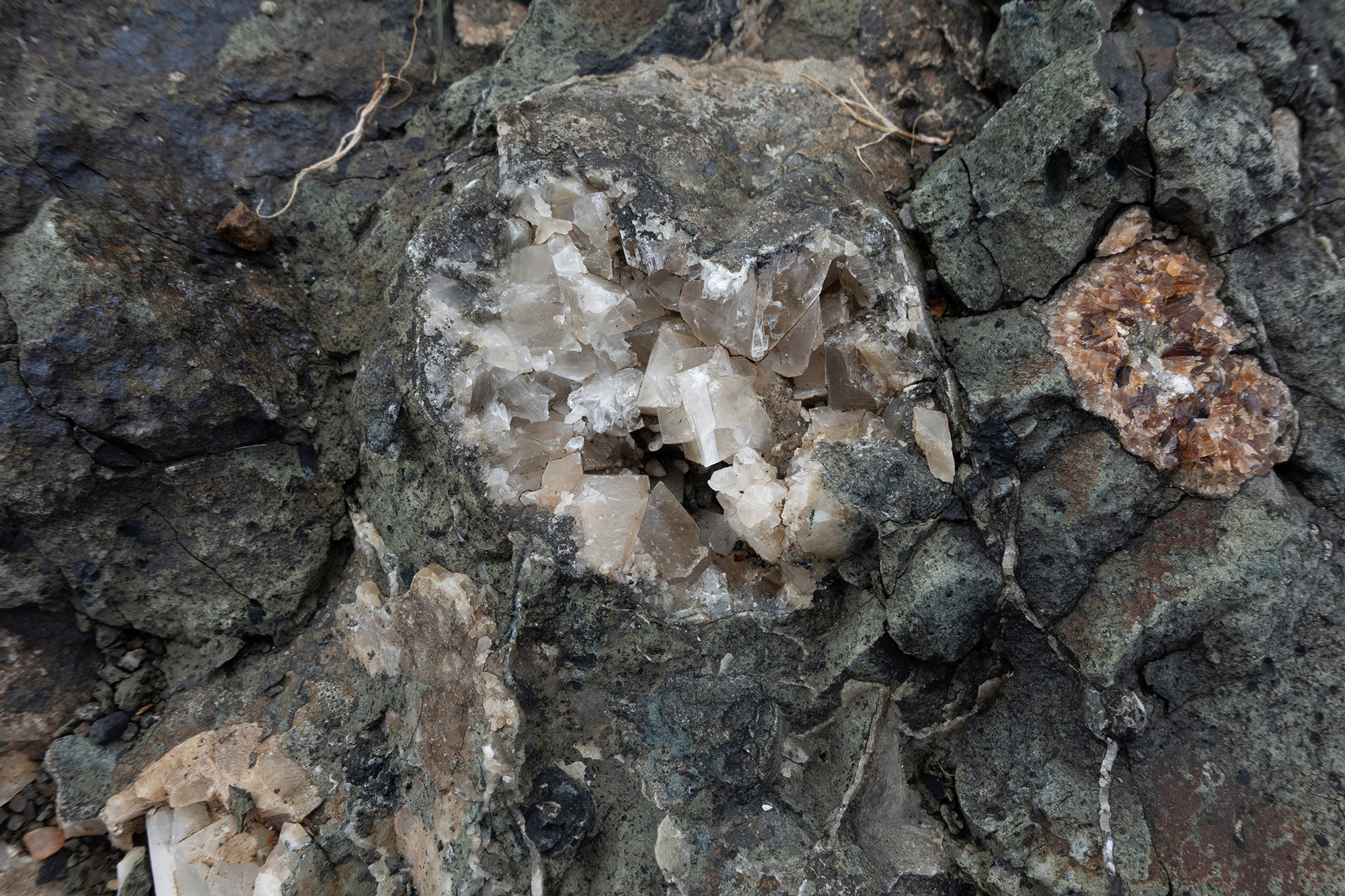
Volcanic Geodes
Some geodes begin as bubbles of gas trapped inside lava.
As the lava cools and hardens, the gas escapes and leaves behind an empty cavity. Groundwater later passes through the surrounding volcanic rock, carrying dissolved minerals into that space.
Over time, those minerals crystallize along the walls of the cavity.
Sedimentary Geodes
Geodes can also form inside sedimentary rocks such as limestone. In these environments, the original cavity may have been created by decomposed organic material, roots, shells, burrows, or other spaces within the sediment. Mineral-rich groundwater eventually enters the cavity and begins depositing minerals in much the same way as it does inside volcanic geodes.
How Long Does It Take a Geode to Form?
There is no single timeline. Geode formation happens on a geological scale and can take thousands to millions of years. Crystal growth may also happen in stages as different mineral-rich fluids pass through the cavity. This helps explain why some geodes contain several distinct layers, colors, or minerals.
Why Do Different Crystals Form Inside Geodes?
It comes down largely to chemistry. If the water entering the cavity is rich in silica, quartz or chalcedony may form. Under the right conditions, purple quartz can form amethyst. Calcium-rich solutions may produce calcite. The minerals do not necessarily arrive all at once either. The chemistry of the water can change during the geode's formation, producing different layers over time. That is why a single geode might have an outer layer of agate followed by clear quartz crystals growing toward the center.
Types of Geodes
Geodes are often classified by the minerals found inside them. Quartz is by far one of the most common, but there are several popular varieties worth knowing.
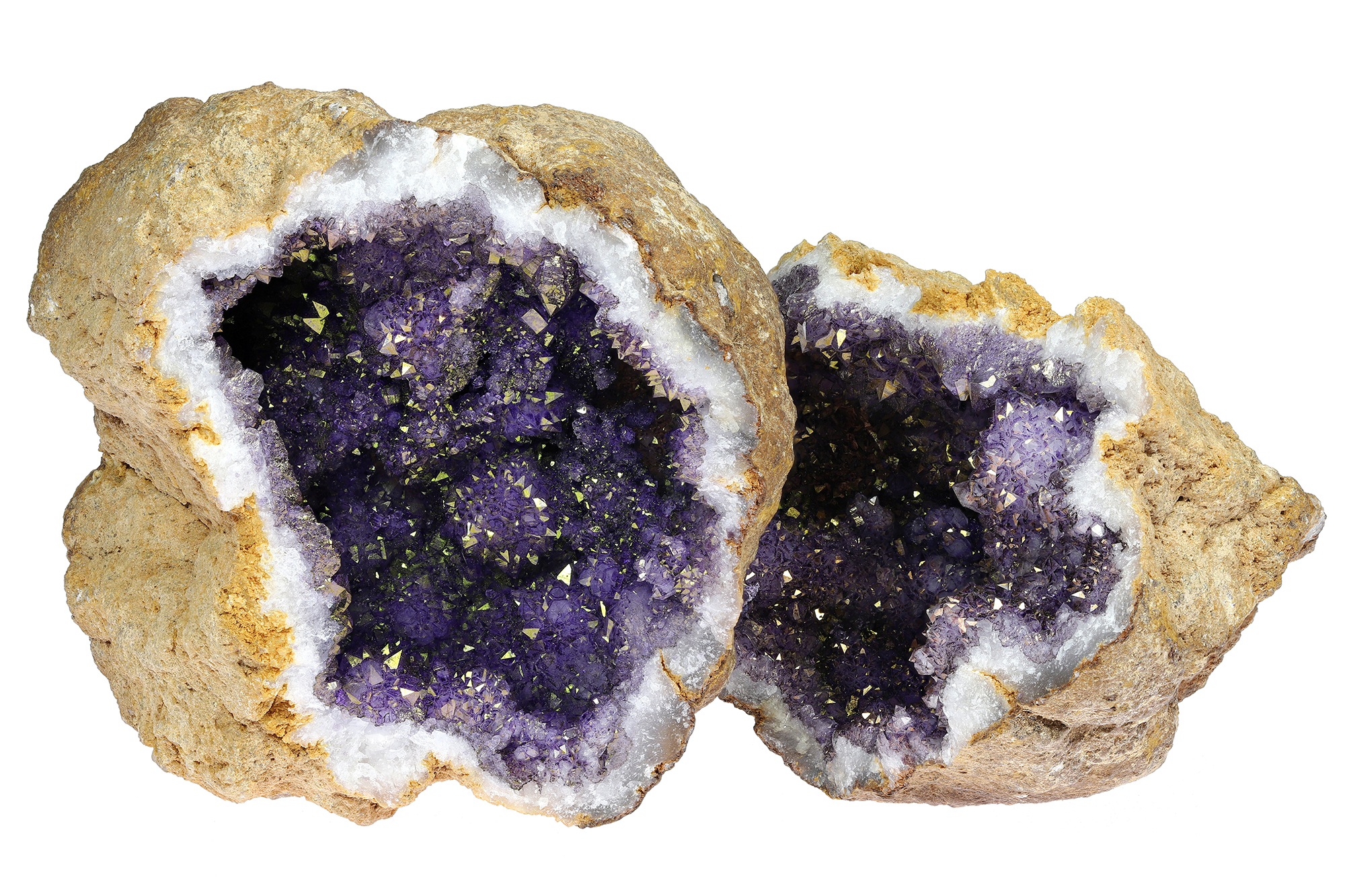
Amethyst Geodes
Amethyst geodes are among the most recognizable and sought-after types of geodes. Their interiors are lined with purple quartz crystals ranging from pale lavender to deep violet. Some have relatively small druzy crystals, while others contain large, sharply defined points. Brazil and Uruguay are especially well known for producing large amethyst geodes and cathedral formations. The purple color of amethyst develops when trace amounts of iron within quartz are exposed to natural irradiation during formation. We have a large collection of massive amethyst geodes which you can check out here.
Quartz Geodes
A quartz geode contains clear, white, or translucent quartz crystals growing inside its cavity. These can range from a fine sparkling druzy surface to larger individual quartz points. Quartz geodes are among the most common varieties and can form in many different geological environments. Because quartz often forms alongside chalcedony and agate, you may also see distinct bands around the outside of the crystal-lined cavity.
Agate Geodes
An agate geode combines two particularly interesting mineral formations. Agate forms when layers of chalcedony accumulate along the inside of a cavity. If the cavity does not completely fill, quartz or other crystals can later grow into the remaining open space. Cutting one open can reveal bands of different colors surrounding a sparkling crystal center. This is also why the line between an agate and a geode can sometimes seem confusing. A solid piece with banded chalcedony is generally considered agate or a nodule. If that formation surrounds a hollow crystal-lined cavity, it can be considered an agate geode.
Calcite Geodes
Instead of quartz, some geodes contain calcite crystals. Calcite geodes can vary considerably in appearance, with crystals ranging from clear and white to yellow, orange, and other shades depending on impurities and formation conditions. Calcite also grows in different crystal shapes than quartz, which can give these geodes a noticeably different appearance.
Citrine Geodes
Yellow or orange quartz geodes are often sold as citrine geodes.
One distinction is worth knowing when shopping for them: much of the intensely orange "citrine" seen in large geodes on the commercial market is actually amethyst that has been heat treated to change its color.
Natural citrine does exist, but large natural citrine geodes are considerably less common.
That does not necessarily make a heat-treated piece undesirable, but the treatment should be disclosed so you know what you are buying.
Other Minerals Found in Geodes
Quartz, amethyst, agate, and calcite are some of the most familiar varieties, but geodes can contain many other minerals. Depending on where they form, interiors can include celestite, barite, pyrite, chalcedony, and other mineral combinations. Part of what makes geodes interesting to collectors is that the exterior gives relatively little indication of exactly what formed inside.
Why Are Geodes Different Colors?
The mineral itself is one factor. Amethyst, for example, is purple quartz, while clear quartz is usually colorless or white. Agate and chalcedony can occur in a huge range of colors and patterns. Trace elements and impurities can also influence color. Iron compounds are particularly important in producing red, yellow, orange, brown, and purple tones in many minerals. Because the chemistry inside a geode can change over time, different layers may have completely different colors. This is why one geode might contain white quartz, another deep purple amethyst, and another layers of brown, red, gray, and cream agate.
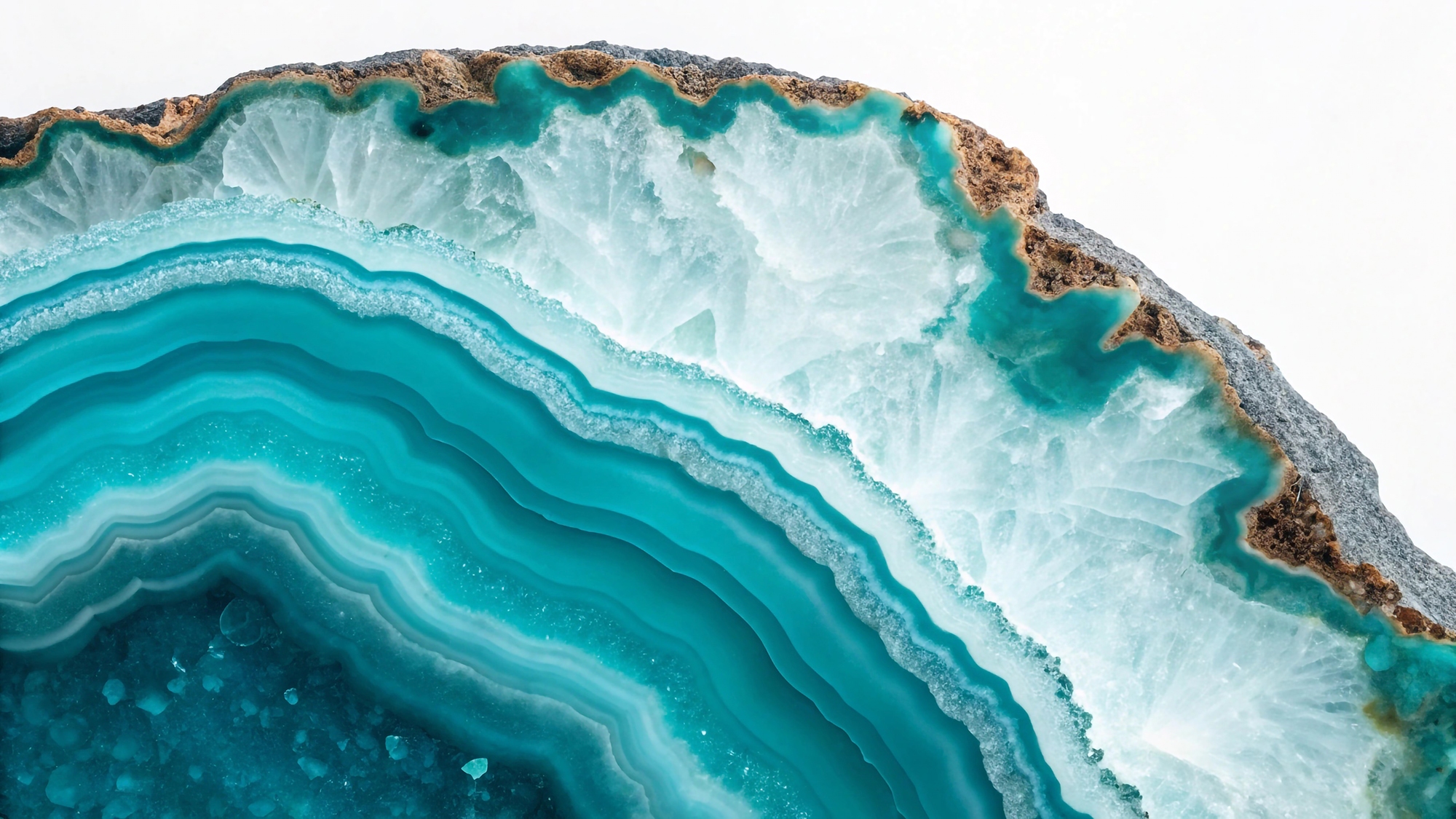
Natural vs. Dyed Geodes
Not every brightly colored geode formed that way naturally. Geodes and agate slices are sometimes dyed to produce stronger blues, pinks, purples, greens, and other colors. The geode itself is still real, but the color has been altered after it was mined. Dyed geodes are often easy to recognize when the color is extremely saturated or appears concentrated inside cracks and porous areas of the stone. Electric blue, neon pink, and intensely uniform colors are good reasons to take a closer look, although color alone is not enough to prove that a geode has been treated. If natural coloration matters to you, look for sellers who clearly disclose treatments.
How to Identify a Geode
Finding an unopened geode is much less obvious than recognizing one after it has been cut.
Unfortunately, there is no exterior characteristic that guarantees a rock is a geode. You can, however, look for several clues.
What Does a Geode Look Like on the Outside?
Geodes are commonly:
- Round, oval, or roughly spherical
- Covered by a rough or uneven outer surface
- Gray, brown, tan, or otherwise relatively plain
- Found in areas known for volcanic or sedimentary geode deposits
Can You Tell If a Rock Is a Geode Without Opening It?
You can make an educated guess, but you usually cannot know with certainty.
Shape, texture, weight, and where the rock was found can all help. Some people also gently shake smaller specimens to listen for loose material inside, although most geodes will not rattle.
Ultimately, cutting or cracking the rock open is the only reliable way to see what is inside.
Quick Geode Identification Chart
|
Feature |
What to Look For |
| Shape |
Often round, oval, or roughly spherical |
| Exterior |
Rough, textured, or uneven |
| Typical color outside |
Gray, tan, brown, or muted |
| Weight |
Sometimes lighter than a comparable solid rock |
| Interior |
Hollow or partially hollow cavity |
| Common minerals |
Quartz, amethyst, calcite, agate, chalcedony |
| Agate banding |
May appear around the crystal cavity |
| Certain identification |
Requires opening or cutting the specimen |
The location where a rock was found is also important. A strange round rock from a well-known geode bed is much more promising than a similar-looking rock picked up in an area where geodes do not commonly occur.
Where can you find geodes?
How to Find Geodes
If you want to look for geodes yourself, location matters more than simply searching for round rocks.
Start by researching known geode-producing formations, rockhounding areas, and collecting sites in your region.
Geodes are often associated with:
- Volcanic rock and ancient lava flows
- Limestone deposits
- Desert regions
- Exposed rock cuts
- Creek and river beds in geode-producing areas
- Areas already known for agate, quartz, and chalcedony
How to Open a Geode
Opening a geode is the only way to know for certain what formed inside.
There are several ways to do it, and the method you choose affects how the finished piece looks.
Hammer and Chisel
For a natural-looking break, a hammer and masonry chisel can be used to gradually work around the outside of the geode.
Rather than hitting one spot as hard as possible, make a series of controlled taps around its circumference. The goal is to slowly create a fracture around the rock until it separates.
Always wear safety glasses and work on a stable surface. Geode fragments can be sharp and may fly when the rock breaks.
This method creates an irregular, natural edge, but you have less control over exactly how the geode splits.
Geode Cracker
A geode cracker applies pressure evenly around the rock until it breaks.
This often produces a cleaner split than simply striking the geode with a hammer and is a popular option at rock shops and geode-cracking attractions.
Rock Saw
If you want two clean, flat faces, cutting the geode with a rock saw is usually the best option. The smooth surface also makes agate banding and internal mineral structures easier to see. Cut geodes are commonly polished afterward to bring out their colors and patterns. For larger or valuable specimens, professional cutting is usually worth considering rather than risking damage.
How Much Is a Geode Worth?
Geodes can range from inexpensive small specimens to museum-quality pieces worth thousands of dollars.
There is no standard price because the value of a geode depends heavily on what is inside it.
Some of the most important factors include:
- Mineral type: Common quartz geodes are generally less valuable than high-quality amethyst, rare mineral combinations, or unusual specimens.
-
Size: Larger geodes generally command higher prices, particularly when they have an attractive crystal cavity.
-
Crystal quality: Well-formed, undamaged crystals are usually more desirable than broken or poorly developed ones.
-
Color: Strong natural color can increase value, particularly in minerals such as amethyst.
-
Formation and symmetry: A dramatic cavity, unusual crystal growth, or attractive agate banding can make one specimen stand out from another.
-
Origin: Certain localities are known for distinctive or particularly high-quality material.
-
Condition: Broken crystal points, repairs, cracks, and other damage can reduce value.
-
Natural vs. treated color: Naturally colored specimens are generally more desirable to collectors than artificially dyed material.
Small common geodes can sell for only a few dollars, while large amethyst cathedrals and exceptional mineral specimens can cost hundreds or thousands. Ultimately, geodes are highly individual. Two specimens of the same size and mineral can have very different values based simply on the quality of what formed inside.
How to Use and Display Geodes
Geodes are popular both as mineral specimens and as home decor because the crystals naturally create a strong focal point.
Large geodes work particularly well on shelves, consoles, mantels, and other surfaces where the interior can remain visible.
Smaller pieces can be displayed individually or grouped with other mineral specimens.
Geode Bookends
One practical use for a larger geode is to cut it into two halves and turn the pair into geode bookends.
Because both halves came from the same formation, you can often see matching crystal structures and agate bands when they are placed side by side.
Their weight also makes many geodes naturally suited for holding books in place.
Geode Slices and Decor
Geodes can also be cut into slices, polished, mounted on stands, or incorporated into decorative objects.
Polishing the cut surface tends to make agate bands and color variations more visible while leaving the crystal cavity itself natural.
Druzy Jewelry
The word druzy refers to a surface covered in many tiny crystals.
Small pieces of druzy quartz or agate can be cut from geodes and used in pendants, rings, earrings, and other jewelry.
Instead of one large crystal point, druzy creates a fine sparkling surface made from hundreds or thousands of tiny crystals.
Geode Meaning and Metaphysical Properties
Beyond their geology, geodes have also developed symbolic and metaphysical meanings.
Because a plain exterior can hide a complex crystal formation inside, geodes are often associated with inner beauty, discovery, growth, and hidden potential.
Their hollow, rounded form has also traditionally been connected with creativity and fertility.
In crystal practices, the properties attributed to a geode usually depend more on the mineral inside than on the geode formation itself.
For example:
- Amethyst geodes are traditionally associated with calm, intuition, meditation, and spiritual awareness.
-
Clear quartz geodes are commonly associated with clarity, intention, and amplification.
-
Agate geodes are often associated with stability, grounding, and balance.
-
Citrine is traditionally connected with optimism, confidence, abundance, and creativity.
How to Clean and Care for Geodes
How you clean a geode depends on the minerals inside it.
Quartz and agate are relatively durable, but not every mineral commonly found in geodes reacts the same way to water, cleaning products, or sunlight.
If you do not know what mineral you have, start with the gentlest method.
Removing Dust
For routine cleaning, use a soft brush, microfiber cloth, or gentle stream of compressed air to remove dust from between the crystals.
A soft paintbrush is particularly useful for large geodes because it can reach between crystal points without requiring you to soak the entire specimen.
Cleaning Quartz and Agate Geodes
For most untreated quartz and agate geodes, lukewarm water and a small amount of mild soap can help remove dirt.
Use a soft brush rather than anything abrasive, then rinse and allow the specimen to dry completely.
Avoid sudden temperature changes. Very hot water on a cold mineral specimen can potentially contribute to cracking.
Be More Careful With Unknown Minerals
If you aren't sure what minerals are inside your geode, avoid soaking it or applying acids, bleach, vinegar, or strong household cleaners.
Some minerals are much softer or more chemically sensitive than quartz.
When dealing with an unusual or valuable specimen, identify the mineral first and choose a cleaning method appropriate for it.
Protect Amethyst From Strong Sunlight
Amethyst is quartz and is physically quite durable, but prolonged exposure to strong sunlight can gradually fade its purple color.
If you have an amethyst geode, display it somewhere bright enough to enjoy it without leaving it in intense direct sunlight for long periods.
Frequently Asked Questions About Geodes
Are all geodes hollow?
A geode should contain some hollow space. If the cavity becomes completely filled with minerals, the formation is more accurately described as a nodule.
Some geodes, however, have only a small remaining cavity and can appear almost solid.
What crystals are commonly found in geodes?
Quartz is one of the most common. Amethyst, calcite, chalcedony, agate, celestite, barite, and other minerals can also occur inside geodes.
Some specimens contain several minerals that formed during different stages.
Are geodes rare?
Geodes as a whole are not particularly rare, but certain types, sizes, mineral combinations, and high-quality specimens can be much less common.
A small quartz geode and an enormous deep-purple amethyst cathedral are both geodes, but they differ dramatically in rarity and value.
How can you tell if a geode is real?
Real geodes have natural mineral structures, irregularities, and crystal growth rather than perfectly uniform manufactured surfaces.
Keep in mind that a genuine geode can still be altered. Dyeing, polishing, cutting, and heat treatment do not necessarily mean the rock itself is fake.
For collectors, the important question is often not simply whether a geode is real, but whether its color and mineral appearance are natural or treated.
Are brightly colored geodes natural?
Some are, but extremely vivid colors should be examined carefully.
Purple amethyst, white or clear quartz, orange and yellow calcite, blue celestite, and naturally colorful agate can all occur.
However, intensely neon pink, blue, green, and purple agates and geodes are commonly dyed.
What is the difference between agate and a geode?
Agate is a type of banded chalcedony. A geode describes a hollow mineral formation.
The two can exist together.
An agate geode typically has layers of agate surrounding an open cavity that is often lined with quartz or other crystals.
If the entire cavity fills with agate and becomes solid, it is better described as an agate nodule.
Are geodes valuable?
They can be.
Common small geodes may have modest value, while large, colorful, rare, or exceptionally well-formed specimens can be worth significantly more.
Mineral type, size, condition, color, crystal quality, origin, and overall appearance all play a role.
Disclaimer: Please consult a healthcare professional for any medical advice. The information in this article is not intended to diagnose, treat, cure or prevent any disease or condition.